Mowing
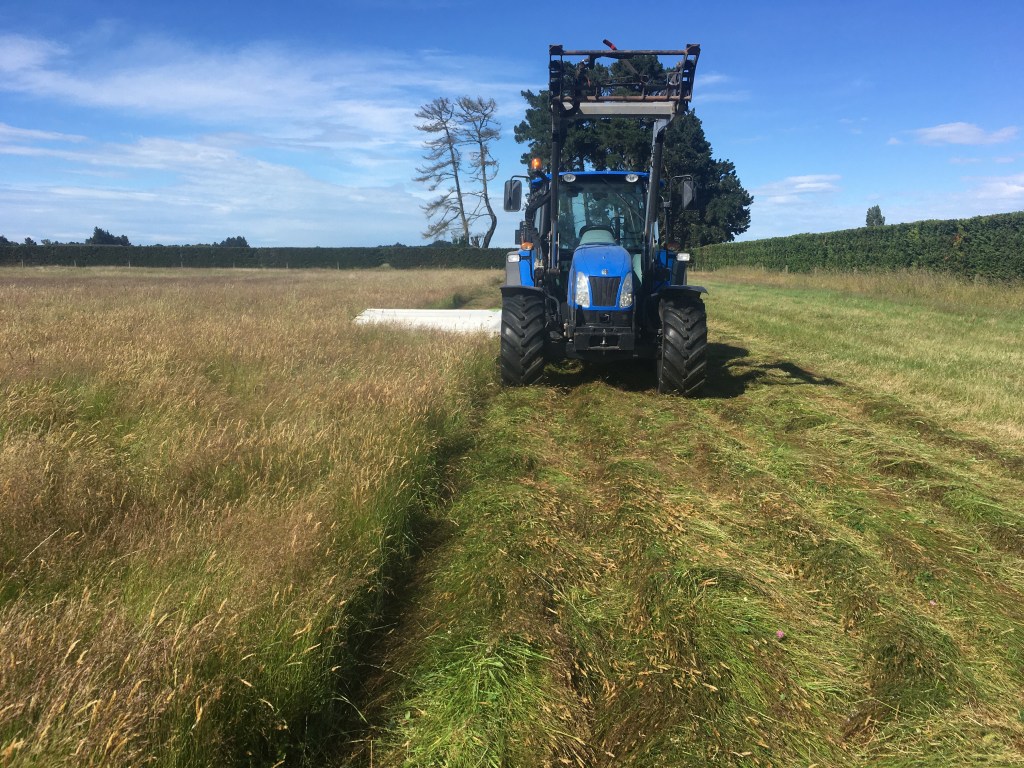
The timing of the first cutting of hay in the year is based on the stage of plant growth. Weather conditions need to be favourable to allow the cut hay to dry out for the rest of the baling process. It’s good practice to review the weather forecast and identify a fine period that will give you at least a few days of dry conditions from the time of your hay mowing. A general rule of thumb is that it takes about 3-5 days of good drying weather to cure hay for baling.
Raking and Baling
Raking is the final step in the drying process and pulls the hay into rows for baling. Raking is normally carried out on the day or the day before the hay is baled.
The final step to making a bale hay is the process of baling. Baling the grass requires the grass moisture content to be optimum to reduce the risk of mold and ensure there is plenty of good dry matter for stock. Too dry and it’s not palatable for stock and too wet mold can easily grow or worse the hay can spontaneously combust, this occurs when moist hay heats up due to a combination of natural microbial and chemical reactions.
Drying and Tedding
Once hay is cut and on the ground, it requires a period of drying time so that the hay doesn’t get baled with a high moisture content, which can cause it to mold or spoil. Tedding is the process of using an implement to lift or fluff up the hay once it has been cut, to promote thorough drying of all parts of the hay. Tedding actually will move the bottom of the windrow up to the top to maximize air circulation. It is also important to make sure the hay doesn’t get too dry, if the hay gets too dry it will not hold important nutrients and animals will not like it as much. The optimum moisture content is around %12-%16.
Drill Seeding
We can drill seed any new seed cultivar you want. From lucerne annual rye, to a mix of clover and perennial. Our drill is computer controller, so we can apply accurate rates of seed. Prior to drilling, you want to ensure the paddock has been prepared accordingly, which should align with the right time of year to drill. Leave out the guesswork, and let us help you achieve the pastures you (and you cattle) desire!
How to make hay
There are five key steps to making quality hay:
- Paddock preparation
- Knowing when to mow
- Drying & Raking
- Baling
- Storage
Weather is the biggest variable to obtaining quality hay for your animals.
Depending on the moisture content of your grass, 3 – 5 days of fine weather is required for drying.
Paddock preparation
Hay can be made from all types of grass. Here in West Melton some of the most common grasses are Timothy, Cocksfoot, sweet vernal, Common couch, Ryegrass, Perry Grass, Plantain, White clover, Brown top.
Steps to help you have a successful season
- Fertilising your paddocks: By fertilising your paddocks, you are returning much needed nutrients to the soil. Every time you take hay or stock off your paddock, you are also taking Potassium, Sulphur and Phosphorus off the paddock. These are key nutrients required for a strong healthy plant.
- Grazing your paddocks: Grazing is a tool that can be used to improve your paddocks. When stock are grazing on a paddock they are returning important nutrients into the soil.
- Topping: When topping is carried out at the right time of a plant’s growth stage, the plant will tend to grow more and the tops will break down into the soil.
- Closing up your paddocks to stock: This is a very important step to having a good hay season. A good time to close up your paddock for hay is early October, this could be different for each property. Once the paddock is closed it is important to make sure your animals stay off of the paddock.
 Lifestyle Pastures West Melton